


Creative industries are evolving rapidly, and employers increasingly value professionals who can combine design, user experience, animation, and digital marketing. Rather than hiring separate specialists for every task, many organizations look for adaptable professionals who understand the complete digital content lifecycle.
A Government Certificate Course that integrates UI/UX Design, Graphic Design, Animation, and Digital Marketing can provide practical exposure, portfolio development, and placement support, helping students prepare for a competitive digital job market.
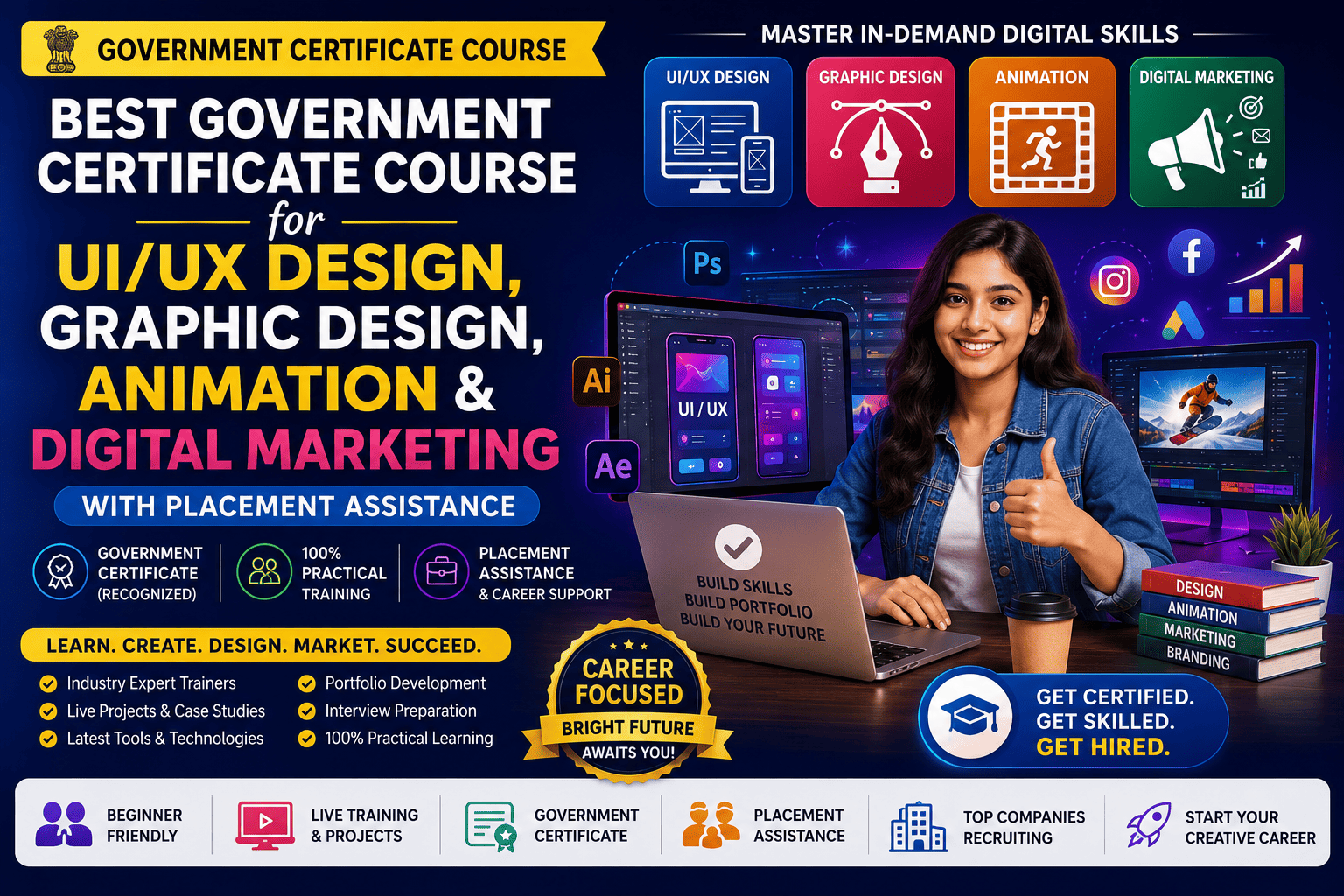
Best Government Certificate Course for UI/UX Design, Graphic Design, Animation & Digital Marketing with Placement Assistance
Digital transformation has changed the way brands communicate with customers. Every website, mobile application, advertisement, social media campaign, and digital product relies on creative professionals who understand both design and marketing.
Instead of mastering only one skill, students can benefit from learning multiple complementary disciplines that work together throughout the digital creation process.
A modern creative course focuses on practical learning, real-world projects, industry-standard software, and portfolio development so that graduates are better prepared for employment or freelancing.
Why Government-Certified Skill Programs Matter
Many employers value structured training that includes practical assignments, assessments, and recognized certification.
Potential benefits include:
- Structured learning pathway
- Industry-relevant curriculum
- Portfolio development
- Practical project experience
- Skill validation through certification
- Better confidence during interviews
The value of any certificate ultimately depends on the reputation of the training provider, curriculum quality, and the issuing or affiliated authority. Always verify certificate recognition before enrollment.
Why Learn Four Skills Together?
Today’s businesses need professionals who can contribute across multiple digital functions.
Learning UI/UX Design, Graphic Design, Animation, and Digital Marketing together helps you understand the complete customer journey—from designing an interface to promoting it online.
This integrated approach can improve collaboration, creativity, and career flexibility.
Course Modules
1. UI/UX Design
Learn how to create user-friendly websites and mobile applications.
Topics
- Design Thinking
- User Research
- Wireframing
- Prototyping
- User Journey Mapping
- Information Architecture
- Responsive Design
- Design Systems
- Accessibility Basics
- Mobile App Design
Software
- Figma
- Adobe XD (where applicable)
- Miro
2. Graphic Design
Develop visual communication skills for print and digital media.
Learn
- Logo Design
- Brand Identity
- Typography
- Color Theory
- Social Media Design
- Packaging Design
- Print Media
- Advertising Creatives
- Banner Design
- Marketing Collateral
Software
- Adobe Photoshop
- Adobe Illustrator
- Canva
- Adobe Express
3. Animation & Motion Graphics
Create engaging visual content for advertising, entertainment, and education.
Topics
- Motion Graphics
- Character Animation
- Kinetic Typography
- Explainer Videos
- Visual Effects
- Storyboarding
- Video Composition
- Audio Synchronization
- Intro & Outro Animation
Software
- Adobe After Effects
- Premiere Pro
- Blender (basic workflows)
- DaVinci Resolve
4. Digital Marketing
Learn how to promote brands and content across digital channels.
Modules
- SEO
- Google Ads
- Meta Ads
- Social Media Marketing
- Email Marketing
- Content Marketing
- Google Analytics
- Search Console
- Marketing Strategy
- Performance Tracking
AI Skills Included
Modern creative professionals increasingly use AI to speed up workflows.
Examples include:
- AI-assisted content generation
- AI image creation
- AI-powered design assistance
- AI video editing support
- AI copywriting
- AI presentation tools
- AI productivity tools
Learning how to use AI responsibly alongside human creativity is becoming an important workplace skill.
Practical Learning Approach
A high-quality creative course often includes:
- Live projects
- Portfolio assignments
- Client-style case studies
- Group activities
- Industry software practice
- Presentation sessions
- Creative challenges
- Capstone projects
These experiences help students demonstrate practical ability beyond classroom learning.
Placement Assistance
Many institutes provide placement assistance to help students transition into employment.
This may include:
- Resume preparation
- Portfolio reviews
- Mock interviews
- Soft-skills training
- Interview guidance
- Employer networking
- Job referrals (where available)
Placement assistance is not the same as a guaranteed job. Students should ask about placement records, employer partnerships, and eligibility criteria before enrolling.
Career Opportunities
After completing this course, learners may pursue roles such as:
- UI Designer
- UX Designer
- Graphic Designer
- Brand Designer
- Motion Graphics Artist
- Video Editor
- Animator
- Multimedia Designer
- Social Media Executive
- Digital Marketing Executive
- SEO Executive
- Content Creator
- Creative Strategist
- Freelancer
- Digital Consultant
Industries Hiring Creative Professionals
- Information Technology
- Advertising Agencies
- Digital Marketing Agencies
- E-commerce
- Education
- Healthcare
- Manufacturing
- Media & Entertainment
- Real Estate
- Startups
- Retail
- Hospitality
Essential Software Skills
| Category | Software |
|---|---|
| UI/UX | Figma, Adobe XD |
| Graphic Design | Photoshop, Illustrator, Canva |
| Animation | After Effects, Blender |
| Video Editing | Premiere Pro, DaVinci Resolve |
| Website Basics | WordPress, HTML, CSS |
| Marketing | Google Analytics, Search Console |
| AI | ChatGPT, Adobe Firefly, Gemini, Runway ML |
Who Should Join?
This course is suitable for:
- Students
- Graduates
- Diploma Holders
- Career Switchers
- Freelancers
- Entrepreneurs
- Marketing Professionals
- Small Business Owners
- Creative Enthusiasts
No prior design experience is required for many beginner-focused programs.
Salary Expectations in India (2026)
| Experience | Estimated Monthly Salary |
|---|---|
| Fresher | ₹20,000–₹35,000 |
| 1–3 Years | ₹35,000–₹60,000 |
| 3–5 Years | ₹60,000–₹1,00,000+ |
| Freelance | Varies by skills, portfolio, and clients |
Compensation depends on experience, location, employer, portfolio quality, and specialization.
Why Employers Value Multi-Skilled Professionals
Professionals with expertise across design, animation, and marketing can:
- Work on complete digital campaigns
- Communicate effectively across teams
- Adapt to evolving technologies
- Build stronger portfolios
- Support end-to-end project delivery
- Explore both employment and freelance opportunities
Frequently Asked Questions (FAQs)
1. What is a Government Certificate Course?
It is a training program that awards a certificate under a government-recognized or affiliated framework, depending on the issuing organization. Always verify the certificate’s recognition before enrolling.
2. Is this course suitable for beginners?
Yes. Many programs start with the fundamentals and gradually introduce advanced concepts and practical projects.
3. What software will I learn?
Common tools include Figma, Photoshop, Illustrator, Canva, Premiere Pro, After Effects, WordPress, and digital marketing platforms. The exact software depends on the institute’s curriculum.
4. Is placement assistance included?
Many institutes provide placement support through resume building, portfolio guidance, interview preparation, and employer referrals. Availability and outcomes vary by institute.
5. Can I freelance after completing the course?
Yes. Building a strong portfolio and gaining practical experience can help you secure freelance projects or start your own creative business.
6. Do I need coding knowledge?
Basic HTML and CSS are useful for understanding web design, but many UI/UX and digital marketing roles do not require advanced programming skills.
7. How long does it take to complete the course?
Course duration varies by institute and learning format. Comprehensive programs often range from a few months to around a year.
8. Are AI tools replacing designers and marketers?
AI is improving productivity by assisting with repetitive tasks and idea generation. Human creativity, strategy, problem-solving, and communication remain essential for high-quality work.
Conclusion
The digital economy continues to create opportunities for professionals who can combine creativity, technology, and marketing. A comprehensive Government Certificate Course covering UI/UX Design, Graphic Design, Animation, and Digital Marketing can help learners build practical skills, develop a strong portfolio, and prepare for careers across a wide range of industries.
When selecting a course, focus on curriculum quality, experienced instructors, practical training, portfolio development, software exposure, and the credibility of the certificate. Choosing a program that emphasizes hands-on learning and career readiness can provide a strong foundation for long-term success in the creative industry.